


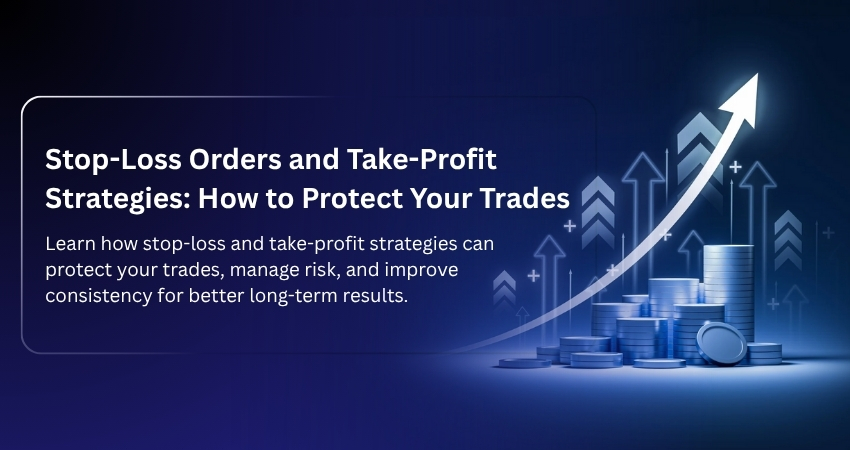
Managing risk is key to long-term success in trading. If you don’t have the right tools in place, a great trade can turn into a major loss. That’s where stop-loss orders and take-profit strategies take place. These two simple techniques can help protect your trades and secure profits, and give you more control over your investments.
What is a Stop-Loss Order?
A stop-loss order automatically closes your trade if the market moves against you by a certain amount. For example, if you buy a stock at $100 and set a stop-loss at $90, it will automatically sell the stock if its price drops to $90, preventing further losses.
The main benefit of a stop-loss is that it removes the emotional aspect of trading. Without it, you might watch the market with anxiety, hoping the price will bounce back. A stop-loss sets a clear limit on how much you’re willing to lose, helping you avoid large, unexpected losses.
What is a Take-Profit Strategy?
A take-profit strategy works in the opposite way to a stop-loss. It automatically closes your trade once it reaches a predetermined profit level. For example, if you buy a stock at $100 and set a take-profit at $200, your trade will close automatically when the price hits $200.
This strategy ensures you secure your profits before the market potentially reverses. It helps you exit the trade at the right time, locking in gains rather than holding on in hopes of higher profits—only to face a loss instead.
Why Are Stop-Loss Orders and Take-Profit Strategies Important?
They Protect Your Capital
Both stop-loss and take-profit orders help manage risk. A stop-loss limits your losses, while a take-profit ensures you lock in profits before the market moves against you.
They Prevent Emotional Trading
By automating the process, these orders help you avoid making impulsive decisions based on fear or greed. Emotional trading often leads to poor decision-making, which these strategies aim to prevent.
They Promote Consistency
By setting these points in advance, you create a clear trading plan. This disciplined approach leads to more consistent performance over time, rather than relying on guesswork or reacting to the market in real-time.
Conclusion
Stop-loss orders and take-profit strategies are simple but powerful tools that help you manage risk, protect profits, and stay disciplined in your trading. They allow you to safeguard your capital, reduce emotional decisions, and stick to your plan. By using them, you improve your chances of success in the market.
To learn more strategies like these and practice them in real-time, join Piplearns courses or our live trading desk for hands-on experience in the market!